
A Guide for New Parents
The bris process, explained gently
If you're feeling a little nervous, that's completely natural — and you're in good hands. Here is a warm, honest walkthrough of what a bris milah is and what your family can expect.
What is a bris?
A bris milah — often simply called a bris — is the covenant Hashem made with Avraham Avinu, marked by the circumcision of a baby boy. It is among the very first mitzvos of the Torah and one of the most cherished in Jewish life — the eternal sign between Hashem and Klal Yisrael, connecting your son to every generation that came before him.
A mohel (pronounced MOY-el) is the trained specialist who performs the bris, combining Torah knowledge and yiras Shamayim with careful, practiced technique — someone who has performed the mitzvah many times and does so b'kavod, with gentleness and skill.
Why the eighth day?
The Torah tells us the bris takes place on the eighth day of the baby's life, counting the day of birth as day one. So a baby born on a Monday would have his bris the following Monday. The eighth day is kept even when it falls on Shabbos or Yom Tov.
Ancient Wisdom, Modern Medicine
Why the eighth day is also the gentlest
By the eighth day, a newborn's natural blood-clotting factors — including vitamin K and healthy platelet levels — have fully developed. The timing set generations ago is exactly when a bris is easiest on the baby, with minimal bleeding and a quick, smooth recovery.
A note on timing: Babies born in the evening, by C-section, or with any health considerations may need an adjusted date. Don't worry about calculating this yourself — reach out and I'll help you determine the correct day.
Who is typically involved?
Part of the beauty of a bris is sharing honors with the people you love. These roles are warm, meaningful, and easy — I'll explain each one and help you decide who does what.
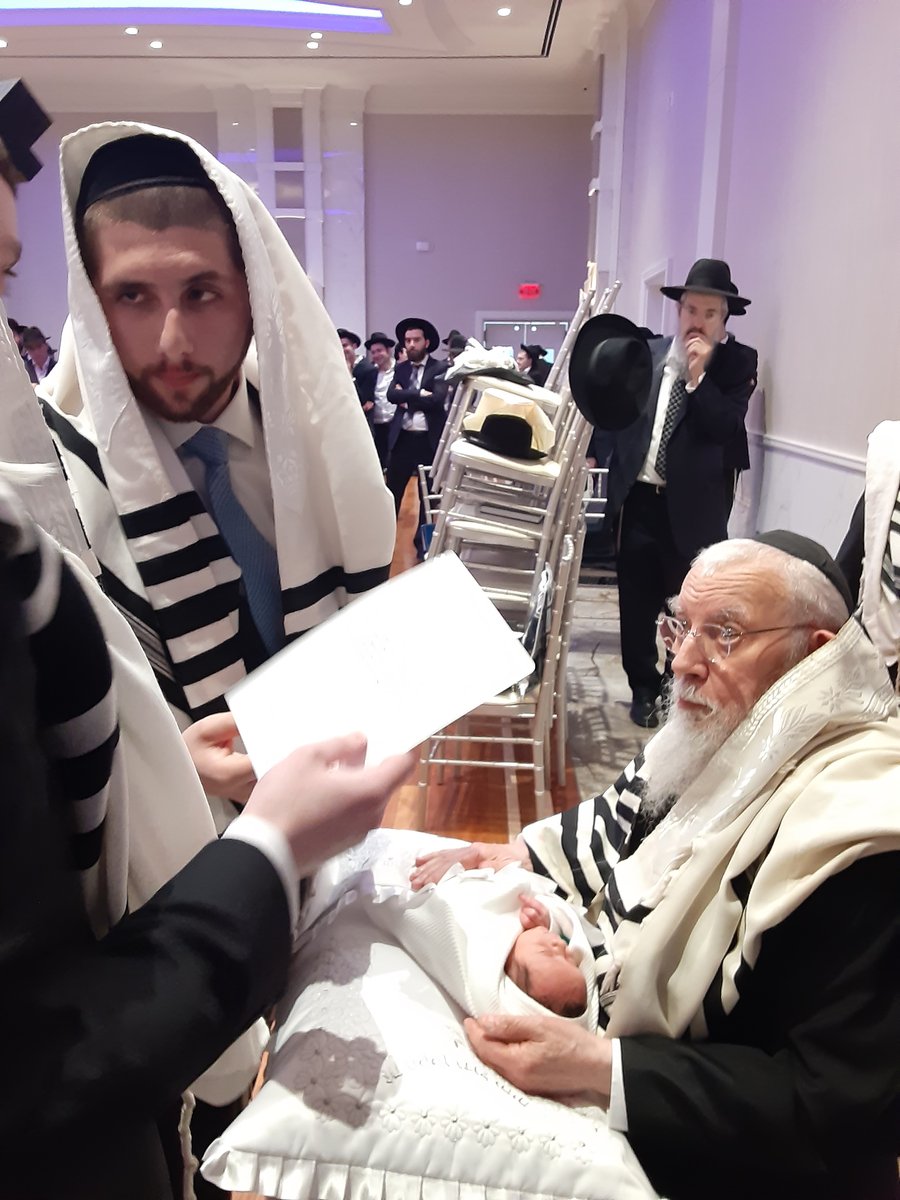
- Sandek — a great honor, often given to a grandfather or close relative, who holds the baby during the ceremony.
- Kvatter & Kvatterin — a couple (often godparents) who carry the baby into the room.
- Parents — who recite a blessing and, most movingly, announce their son's Hebrew name.
- Family & friends — who gather to witness, celebrate, and share in the joy.
What happens during the ceremony
The ceremony itself is brief — usually just a few minutes — and is followed by blessings, the naming, and a festive meal. Here's the flow:
Welcoming
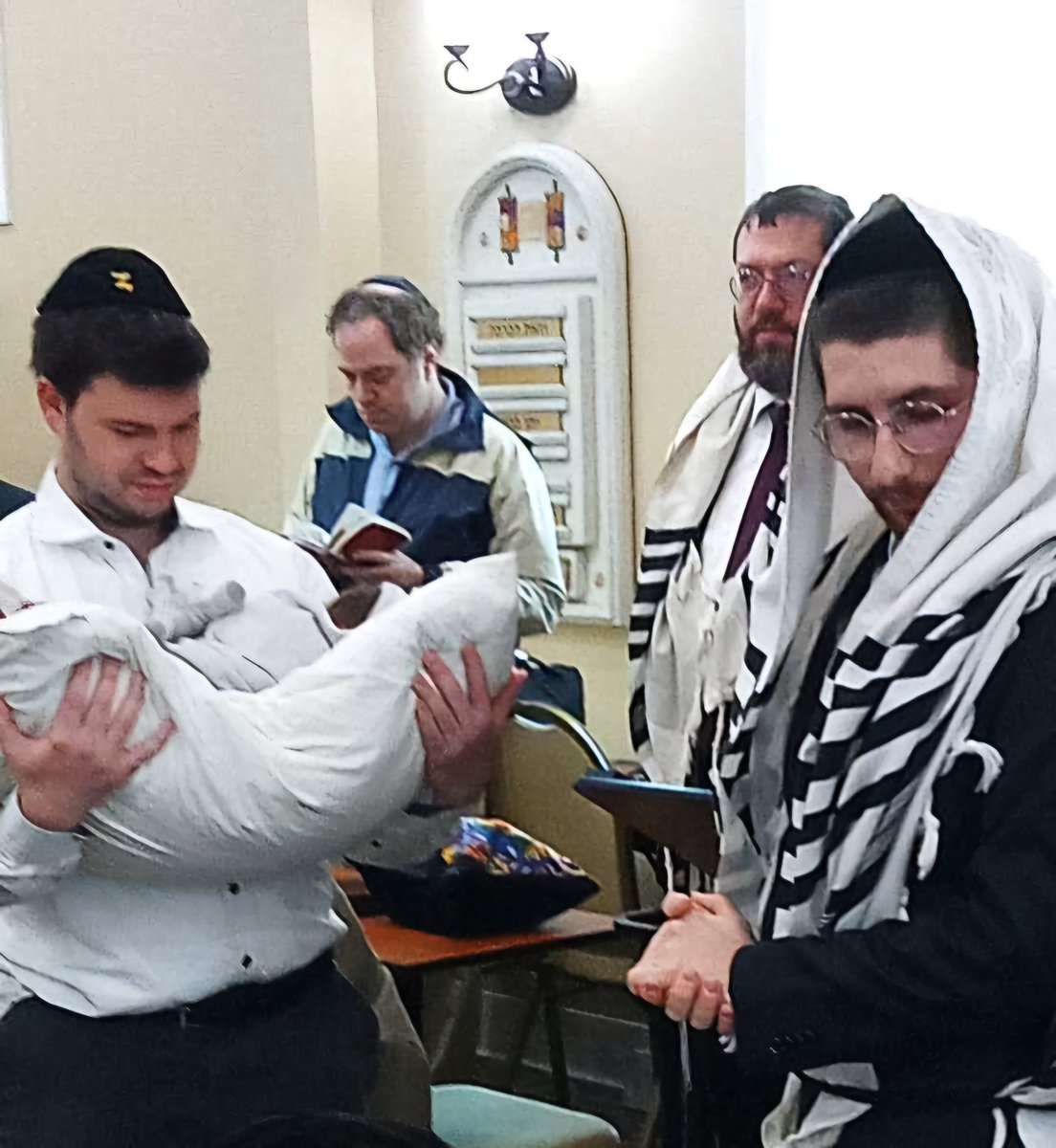
The baby is carried in and welcomed with the words “Baruch haba” — blessed is the one who arrives.
The circumcision
The bris itself is performed swiftly and gently — typically just five to ten seconds — with comfort measures for your baby throughout.
Blessings & naming
We recite blessings over wine and the covenant, and your son receives his Hebrew name.
Celebration
Mazel tov! The bris concludes with a festive meal (seudat mitzvah) shared with loved ones.
Is it safe? A word on comfort and medical practice
Your baby's safety and comfort come first, always. Because the procedure is so brief — only a few seconds — and uses a careful, time-tested technique, discomfort is kept to a minimum. Most babies settle within moments, and many sleep right through the celebration afterward.
I perform every bris by hand, in the traditional way — without clamps or mechanical devices. It is this time-honored technique that lets a bris take only seconds, with minimal bleeding and a quick, comfortable recovery.
- Traditional hand technique — no clamps or devices
- Quick and gentle — the bris takes only seconds
- Careful pre-ceremony check to confirm your baby is ready
- Clear written aftercare instructions and personal follow-up by phone
- Coordination with your pediatrician whenever needed
If your baby isn't ready on day eight, that's okay. Health always comes first. If your pediatrician advises waiting — for jaundice, prematurity, or any reason — we simply reschedule for when your son is strong and ready.
The Mesorah, Unbroken
No clamps or devices — ever
I perform every bris entirely by hand, exactly as it has been done for generations. No Gomco clamp, no Plastibell, no Mogen clamp — nothing between the mesorah and your son.
A traditional bris vs. a hospital circumcision
A bris is not the same as a hospital circumcision. In a hospital, the procedure is usually performed with a clamp or a plastic device — and it is those devices that make it slower and the recovery longer. Performing the bris by hand, in the traditional way, means it is over in seconds. Here is how the two approaches compare.
A traditional bris
- Performed by hand — no clamps or devices
- Complete in just seconds
- Minimal bleeding and a quick recovery
- No injections or drugs needed
- In your home, surrounded by family
- A meaningful mitzvah — not only a procedure
Device-based circumcision
- Relies on a device — a Gomco clamp, Plastibell, or Mogen clamp
- A Gomco procedure can take 15–30 minutes
- A Plastibell ring can take days to fall off, lengthening recovery
- The Mogen clamp has been the subject of safety concerns
- Usually a clinical setting, with more stress for the baby
- Purely medical, without the ceremony
Choosing the right mohel
Deciding who will perform your son's bris is a personal and important choice. As you consider your options, here are a few things worth looking for.
- [Your point — e.g. experience and training as a mohel]
- [Your point — e.g. medical background and up-to-date practices]
- [Your point — e.g. warmth, patience, and clear communication with your family]
- [Your point — e.g. willingness to answer questions before and after]
- [Your point — e.g. availability, and personal follow-up during healing]
How to prepare
There's very little you need to do — I bring everything required for the ceremony. Before the day, I'll send you a simple checklist. In general, it helps to have:
- A sturdy table in a well-lit area
- Two soft pillows or a cushion
- Fresh diapers, wipes, and a change of clothes for the baby
- Kosher wine or grape juice and a cup for the blessings
- Optional: a tallit or special garment, if your family has one
Most of all, prepare to be present. This is a joyful milestone — try to soak it in.
Before & after: I'm with you the whole way
We'll connect before the bris — by phone or in person — so you know exactly what to expect and every question is answered. Afterward, I provide detailed aftercare guidance and check in personally. Healing is usually quick and uncomplicated, and I remain available to you.
Have a question I didn't cover? Visit the FAQ, or simply call, text, or message me. No question is too small.
Ready to plan your son's bris?
I'd be honored to be part of your family's simcha. Let's talk about your ceremony.